Lamy Al-Star Review

Introduction

IMG_20160311_153710

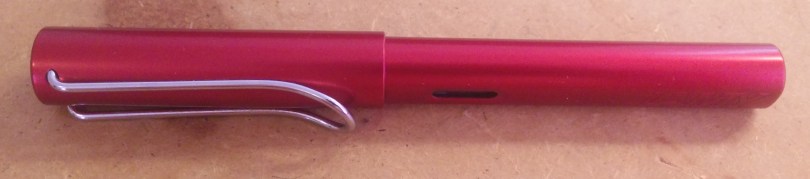
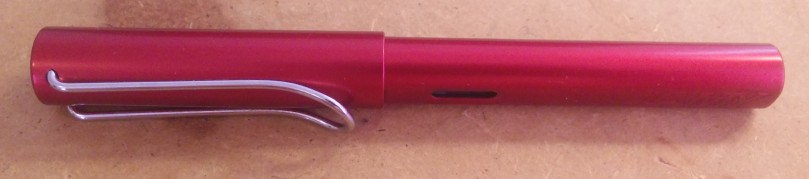
As with many fountain pen enthusiasts, my first fountain pen was a Lamy. I received the Lamy Al-Star as a gift after expressing interest in writing with fountain pens. It doesn’t get used as often as my Platinum 3776 Century. Read on to find out why.

Specs

Dimensions: 140mm (length), 13mm (diameter)
Weight: 20g
Place of Manufacture: Germany
Price: $47 (retail), $37 (most retailers)

Some History

The Lamy Safari is one of the most common starting pens. Being inexpensive, coming a reputable (debatable) manufacturer, and being fairly durable, it lightens the learning curve. The Al-Star and the Vista are variants of this design, with the nib and feed remaining the same. The Vista is transparent while the Al-Star is made of anodized aluminum.

Fit and Finish

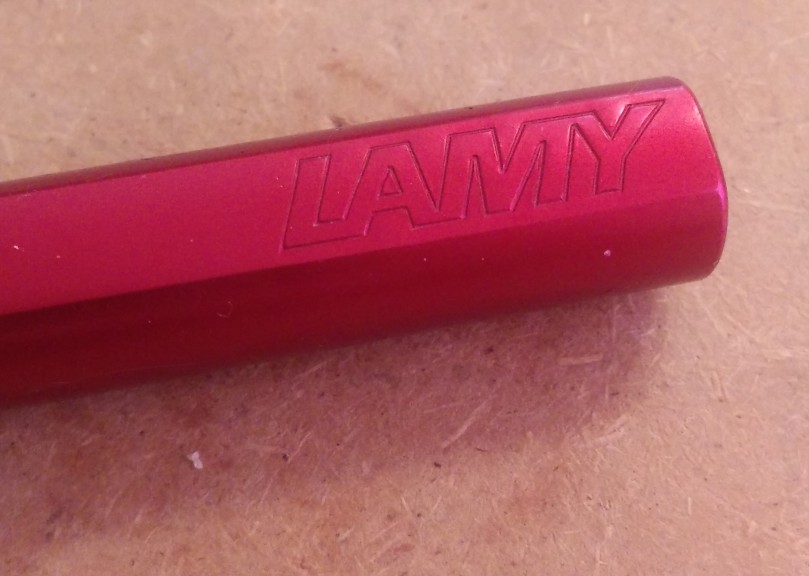
The Al-Star has somewhat better tolerances than the Safari. It suffers some of the regular issues such as a hit-or-miss feed and nib as well as some general quality issues with the body. For example, the plastic has a few ridges from the molding and the LAMY engraving (or perhaps pressing) on the body has irregularities in the corners.
IMG_20160311_153645

Functionality

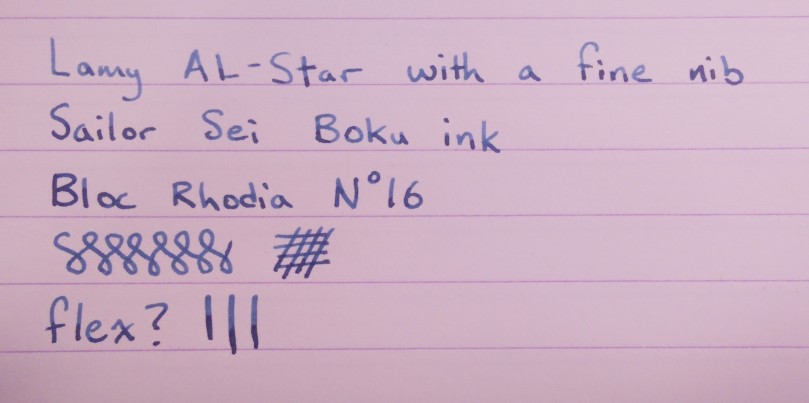
The pen comes in all normal Lamy Safari nib sizings. This fine nib is a European fine and puts down a line equivalent to a Japanese medium.
IMG_20160311_164407

The pen does not have much flex.

The converter is a Z24 that can hold around 0.6 mL.

Conclusion

As a first fountain pen, the Lamy Al-Star has some merit. It has a solid construction and the pricing makes it almost acceptable to drop it nib-first on the ground when you’re still learning your way.

With European nib sizing, it can be a bit hard to get finer lines and the irregularities and inconsistencies with Lamy production can make one pen lovely to use and another pen a prop.

For beginner pens, I’d personally recommend the Sailor HighAce Neo. While quality of construction is about the same, the quality of the nib is a bit better and it comes in at a lower price.
Platinum Century 3776 EF Review

Introduction

Processed with VSCO with a6 preset

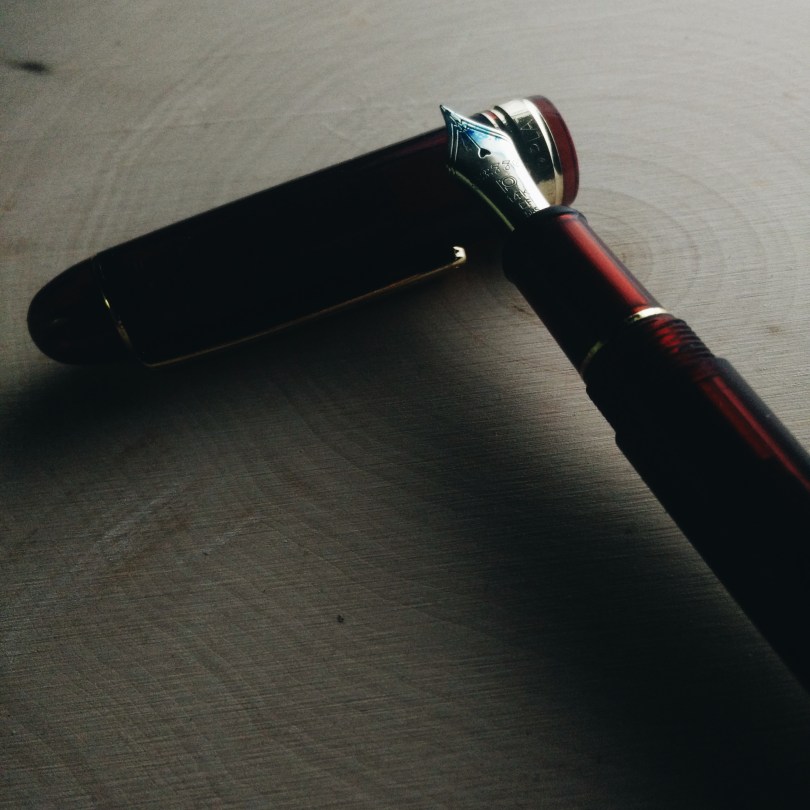
My Platinum Century 3776 is my daily driver for all my writing tasks. Whether I bring it to class, I clip it to my shirt when I’m all dressed up, it’s usually either in my bag or in my pocket. Sure the body has signs of wear due to all this carrying, but I wouldn’t have it any other way. Here’s some words on my trusty fountain pen.

Specs

Dimensions: 120mm (length), 13mm (diameter)
Weight: 20g
Place of Manufacture: Japan
Price: $220 (retail), $70-100 (eBay, direct from Japan)

Background

When I was picking out my next fountain pen,I had a Pilot Custom 74 in one hand and the Platinum in the other. These two pens are are very similar in many ways. They are of similar length, made of similar material, and both feature 14k nibs. However, there were a few small differences that made me choose the Platinum over the pilot.

PackagingIMG_20160304_221648

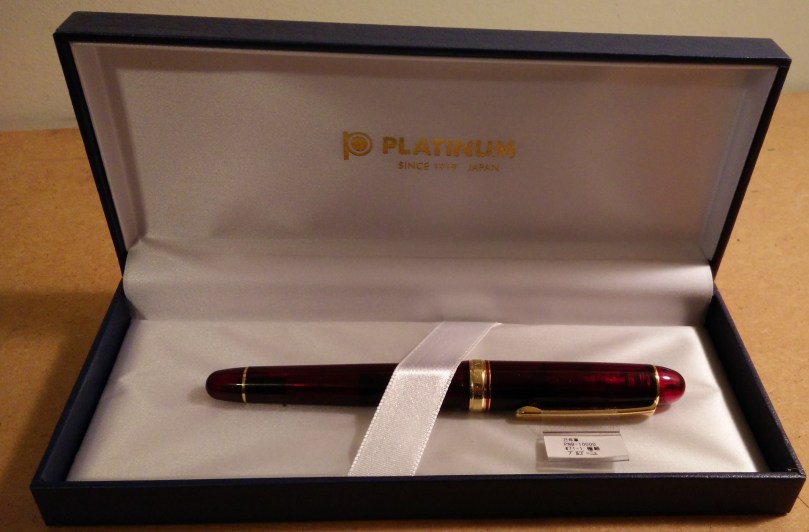
The pen comes in a plastic snap box, housed in a white cardboard sleeve. The case feels appropriate for a pen of this price. It is sturdy and cushioned for the pen. The ribbon holding the pen is taut and it can be a bit difficult to put the pen back if you wanted (as I did for the pictures).

Fit and Finish

IMG_20160304_221818

The pen body is made out of resin which I assume is an alternative (fancier/more accurate) name of the type of plastic that is used. The light weight can be a tad off-putting and the texture that it has can feel a bit cheap.

The pen has gold trim from top to bottom. The cap features a gold pocket clip and there is a gold band with the name of the pen around the bottom of the cap. Additionally, there are two more smaller gold bands on the main body of the pen.

The nib is rather large in comparison with the Pilot (this was one of the reasons I chose the Platinum). The gold content, Platinum “P” and “#3776” are engraved on the nib.

The pen supposedly comes with a “Slip and Seal” technology mechanism that is to keep the ink from drying out for up to 24 months. The spring and additionally plastic sleeve used in this technology is easily seen through the plastic cap.

Functionality

IMG_20160308_164037

I’m a student and this pen is exactly what I need it to be. I don’t need super flex or BB nibs. What I need is a pen that will work day in and day out. This is exactly that pen. The thin narrow line that it produces is not overly wet, though it starts every time.

The body is very prone to scratching. I don’t carry the pen in the same pocket as my keys, but scratches of all sizes have slowly appeared. The trim, however, does not seem to have chipped at all.

Conclusion

I have no regrets with this pen. Sure, it has an outdated appearance and can look a bit out of place. However, the way it performs and the feeling it has in my hand is… I can’t put it in words.